
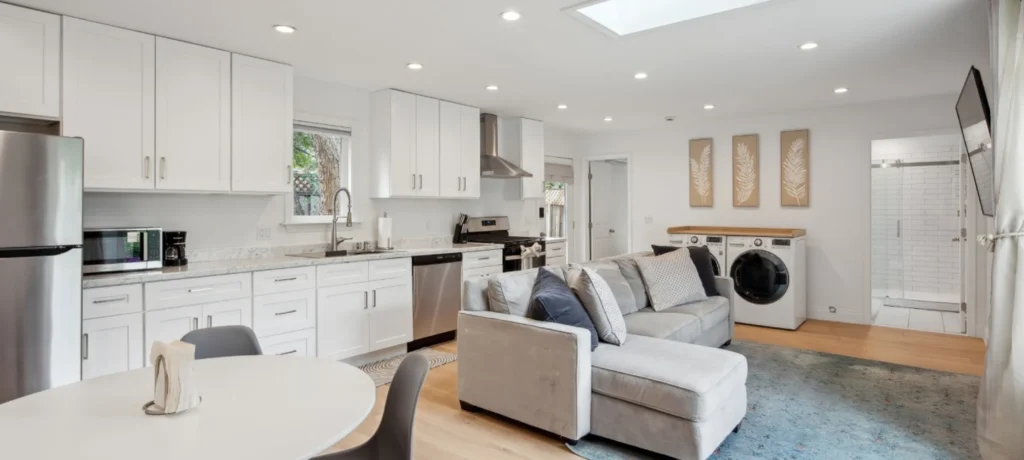
Putting an Accessory Dwelling Unit (ADU) on one’s property can open up the possibility of flexibility, accommodate family members, and also create a source of income. However, before considering the design, one needs to know whether it is legally and practically feasible to erect one on the property. There are several factors, including zoning, lot size, setbacks, and other existing site conditions, which affect what can be done.
Can I Build an ADU on My Property?
If you’re asking, ‘Can I build an ADU on my property?’ the first step is understanding the zoning and development rules that apply to your address. California has established statewide ADU regulations, but local jurisdictions may have additional requirements related to setbacks, height, parking, and other site-specific conditions.
The space, utilities, access, and location of the existing structures determine where the new ADU can be built and how large it can be.
What to Check Before Building an ADU
Before moving forward with building units on your property, consider:
- Zoning: Make sure that the construction of an ADU on the property is allowed.
- Setbacks: Check the distance from property lines and from other buildings.
- Lot and building conditions: Evaluate available space, slopes, drainage, and existing foundations.
- Utilities: Determine how water, sewer, electrical, and other systems can serve the new unit.
- Access: See how residents and construction workers will reach the ADU.
Can I Add an ADU on My Property?
Dwelling Lab can assess the property’s opportunities and constraints, helping homeowners understand what may be feasible before developing detailed plans.
Once feasibility is established, homeowners can explore modern ADU designs that suit the existing home and intended use. Developing detailed ADU plans that California homeowners can actually build requires more than choosing a floor plan. The design must respond to applicable codes, site conditions, structural requirements, and permitting needs.
Well-developed ADU construction plans provide the foundation for a smoother approval and building process, helping turn a property’s unused potential into purposeful living space.