
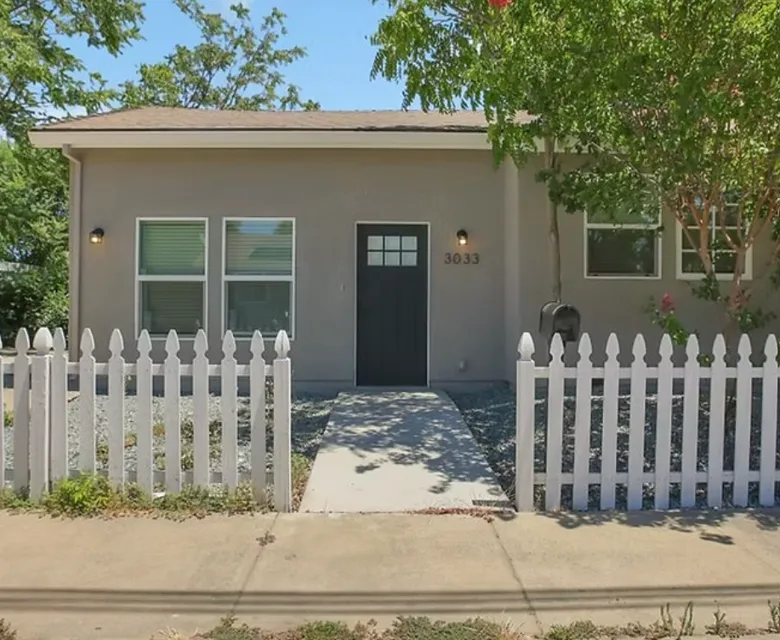
The location of your ADU will be determined by the topography of your land, zoning regulations, and how the new structure relates to the existing ones. By finding out the information beforehand, you will be able to make the right decision on whether to go for a detached, semi-detached, or remodeled ADU design without the need to make extensive plans.
What Are the ADU Setback Requirements?
ADU setback requirements determine how far the unit must be positioned from property lines and, in some cases, other structures. California has statewide rules governing certain ADU setbacks, but local requirements and site conditions can still affect placement.
If you’re wondering how close can an ADU be to the property line, the answer depends on the type of ADU, its location, and the applicable regulations. Existing structures that are converted into ADUs may have different considerations than newly constructed units.
Where Can I Build an ADU on My Property?
When asking where can I build an ADU on my property, start by looking at the available buildable area. The location of your existing home, garage, utilities, trees, slopes, easements, and access routes can all influence where a new unit can fit.
For detached units, homeowners often consider the backyard, but backyard ADU rules still need to be reviewed before selecting a location. A backyard may appear suitable but have limited buildable space once setbacks, access, and other site constraints are considered.
Understanding ADU Placement Requirements
ADU placement requirements are not limited to property-line distances. The design also needs to account for access, utility connections, building height, fire-safety considerations, and how the new structure relates to the existing home.
The ADU distance from property line should therefore be evaluated as part of the entire site rather than as an isolated measurement.
At Dwelling Lab, site evaluation is an important part of the early design process. Understanding your property’s constraints and opportunities helps determine an ADU location that is practical, code-aware, and compatible with the way you use your home.
Good placement can make an ADU feel like a natural extension of the property rather than simply an additional structure.