
Key Takeaways
- When planned and designed appropriately, an ADU can be a source of consistent income and an overall asset to a property.
- Homeowner and investor demand for ADUs has placed California on track to approve over 80,000 permits for ADUs from 2018 to 2023.
- Investors consider the smartness of design, effective layout, and preferred location as some of the most important factors to help them earn better returns.
- Working with experienced Bay Area architects helps reduce permitting delays and costly design changes.
- Flexible ADUs are great for renters, multi-generational families, and prospective home buyers.
As the price of real estate continues to increase across the state, investors are looking for ways to add value to the properties they currently own, instead of purchasing additional properties. One particular desirable solution is to build an ADU.
The right accessory dwelling unit design can generate an additional revenue source, add value to your home, and utilize existing land. According to the California Department of Housing and Community Development, more than 80,000 ADU permits were issued statewide between 2018 and 2023, highlighting the growing demand for these versatile living spaces.
Focus on Rental Demand First
A first step to creating an ADU is to consider who will be your future tenants.
Homeowners in many Bay Area neighborhoods are looking for more efficient, private, and convenient homes, close to work, transit, and community services. A one-bedroom ADU may be a wise option for professionals, couples, and retirees, and can require less investment than a bigger unit, but its efficient floor plan can be a good choice for them.
Maximizing rentals and returns through rent demand optimization in the local market.
Maximize Every Square Foot
Profitability isn’t all about size. More is not always better; an efficient, smaller-sized ADU is more effective than a larger unit that is not used due to inefficient square footage.
Useful features are:
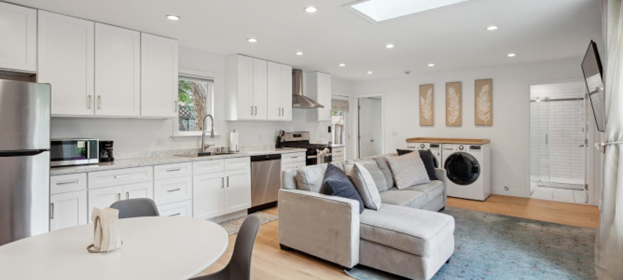
- Open living areas
- Built-in storage
- Large windows for natural light
- Energy-efficient appliances
- Private outdoor space
- Tall ceilings
Experienced Bay Area architects understand how to create layouts that feel spacious while keeping construction costs under control.
Build for Long-Term Flexibility
The real estate landscape is dynamic. The more flexibility investors have if they design ADUs for multiple uses.
An ADU can be used for:
- A long-term rental
- Housing for aging parents
- A guest suite
- A home office
- Accommodation for adult children
Those properties that can meet the changing family and market requirements generally have better long-term value.
Understand Local Regulations Early
While the regulations have been streamlined for ADUs in California, each city has its own set of development standards.
Before getting the balls rolling, investors should verify:
- Zoning requirements
- Setback regulations
- Utility connection requirements
- Parking rules
- Permit timelines
In planning the project, it is important to resolve these problems before construction starts, to prevent the development from being delayed by costly hindrances.
Invest in Quality Design
The costs of building are high, and careful planning is crucial.
A professionally created accessory dwelling unit design will not only make the unit look good, but it can also save on unnecessary construction costs, make permitting easier, and make it more functional.
Structural planning, site placement, and energy-efficient solutions are also coordinated by the design professional, which will benefit the owner and future tenants.
Final Words
Many investors see ADUs as a way to enhance both cash flow and property value. Generally, successful projects require advanced planning, optimal layouts, and an understanding and appreciation of local zoning ordinances.
Consulting a Bay Area architect or designer who has experience preparing high-quality accessory dwelling unit designs will ensure that an attractive design creates an equally profitable project. In addition, an accessory dwelling unit represents more than just additional housing; it is a long-term investment for your portfolio.