
Designing Exteriors for Home Additions, Remodels, and New Construction in Sacramento and the San Francisco Bay Area
When homeowners ask us what the exterior of their house should look like, they’re often really asking a deeper question: How much should change—and how much should stay the same?
In the Bay Area, the answer is rarely one-size-fits-all. Our region’s architecture spans Victorians and Spanish Colonials, ranch houses and cabins in the woods, mid-century modern gems and contemporary infill. Climate, landscape, neighborhood, planning codes, and—most importantly—the personality of the people who live there all shape what an exterior wants to become.
This post walks through a spectrum of ideas and approaches we commonly take in our work—from minimal additions that quietly blend in, to full façade transformations and modern ground-up projects—using real-world scenarios we see across the Bay Area and beyond.
Start Small: Additions That Disappear Into the Existing House
The most restrained exterior strategy is often the most successful.
When we design additions—a new bedroom, expanded kitchen, or second-story pop-up—the first question is whether the addition should read as new at all. In many neighborhoods, especially those with strong existing character, the best outcome is an exterior that feels like it was always there.
That means:
- Matching roof pitches and overhang depths
- Aligning window proportions and trim profiles
- Continuing siding materials and rhythms
- Respecting the original massing and scale
The best additions don’t announce themselves—they simply make the house feel whole.
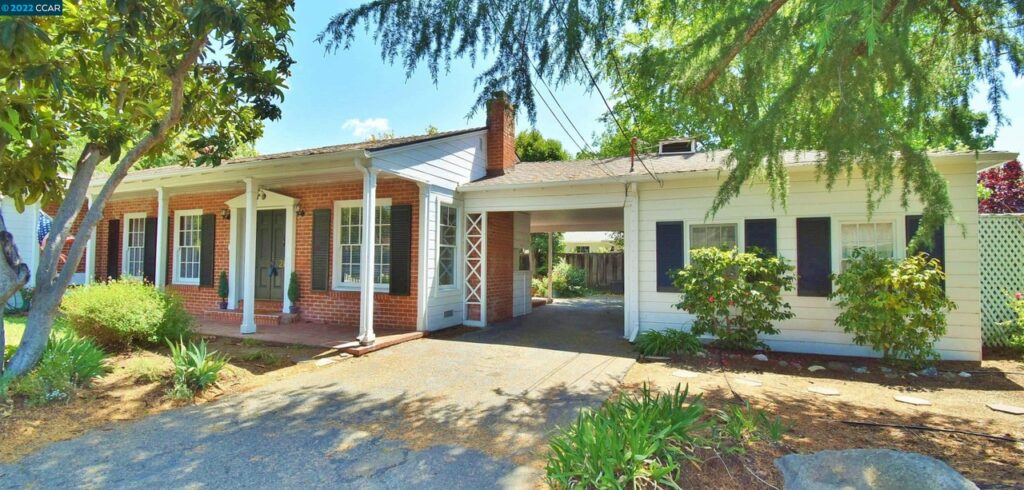
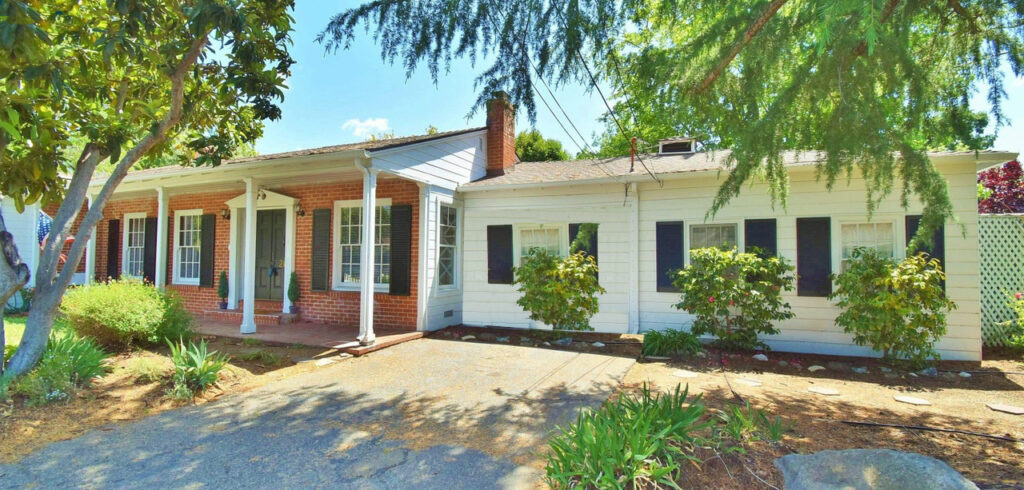
In the above project, good design is nearly invisible. The addition doesn’t compete with the original home; it completes it.
Farmhouse Remodel Exterior Design: A Facade Refresh That Unifies the Home
Not every project requires a full architectural reinvention. Sometimes the bones are good—but the exterior needs clarity.
We see this often with 1940s and 50s farmhouse and ranch-style homes, where incremental changes over decades have diluted the original intent. A thoughtful façade refresh can unify the house by simplifying materials, tightening window layouts, and introducing a more deliberate entry sequence.
Typical moves include:
- Reducing competing exterior finishes
- Reworking porch proportions
- Introducing a limited, intentional color palette
- Upgrading windows while maintaining scale
The result isn’t nostalgia—it’s coherence.
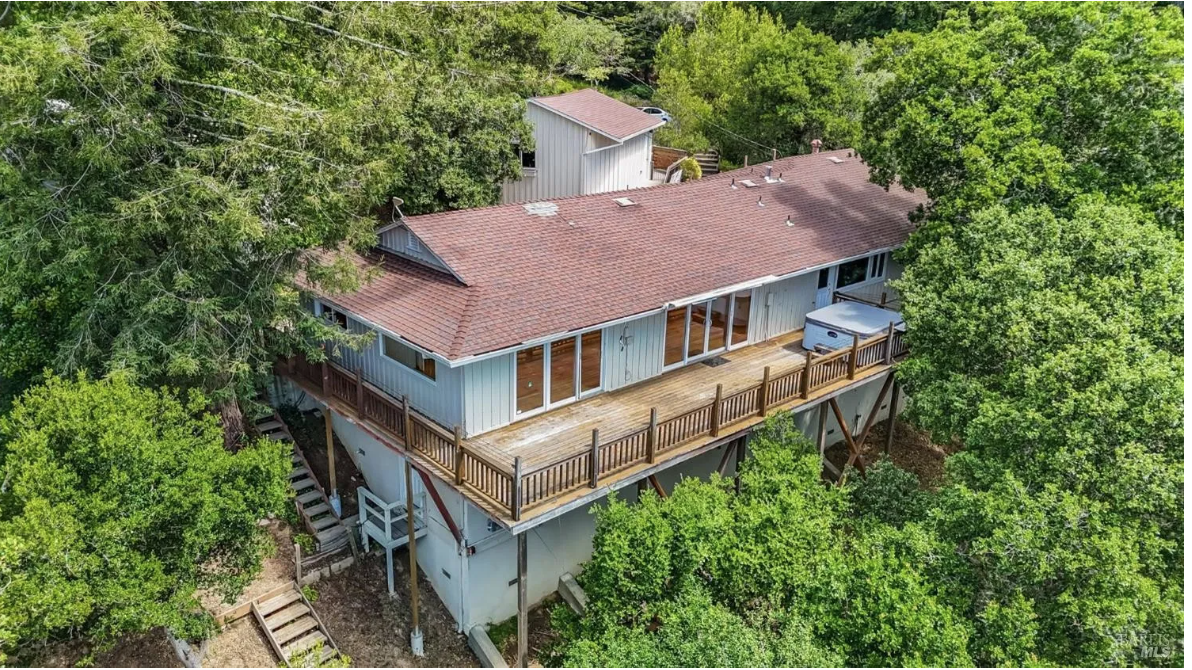
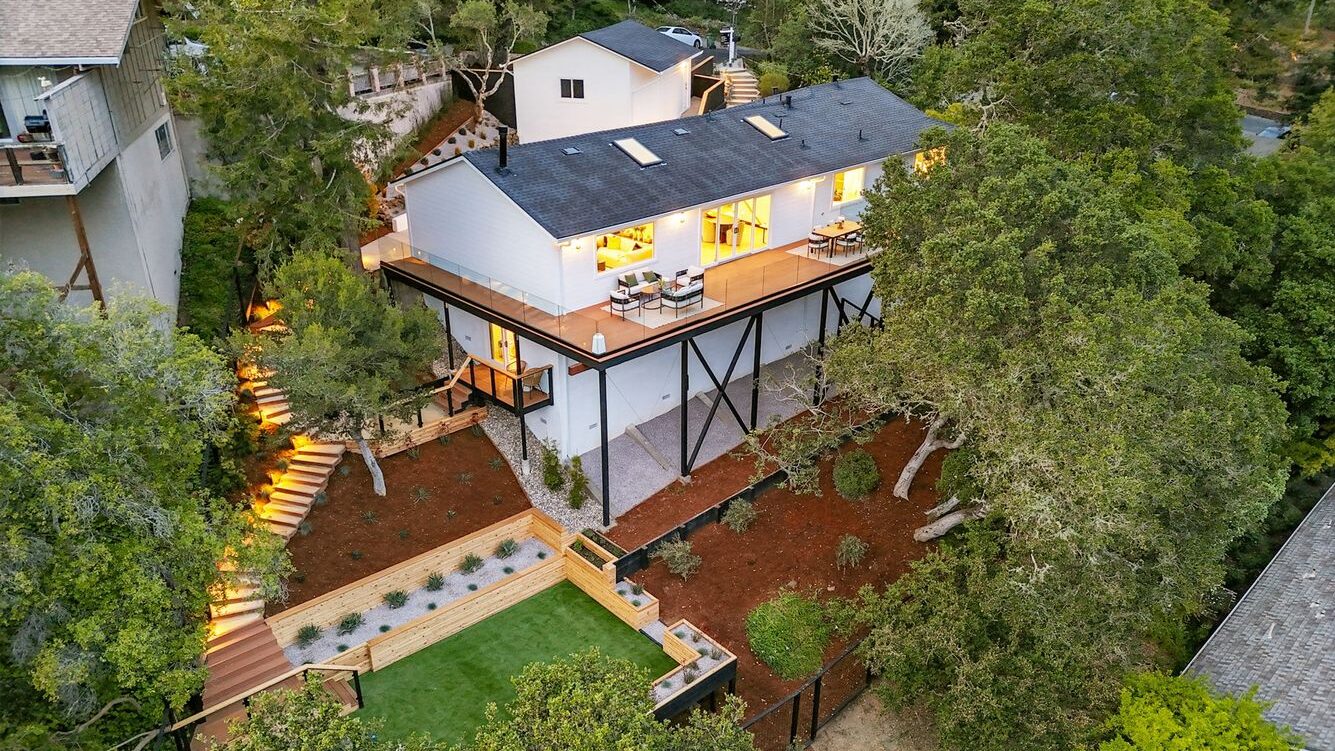
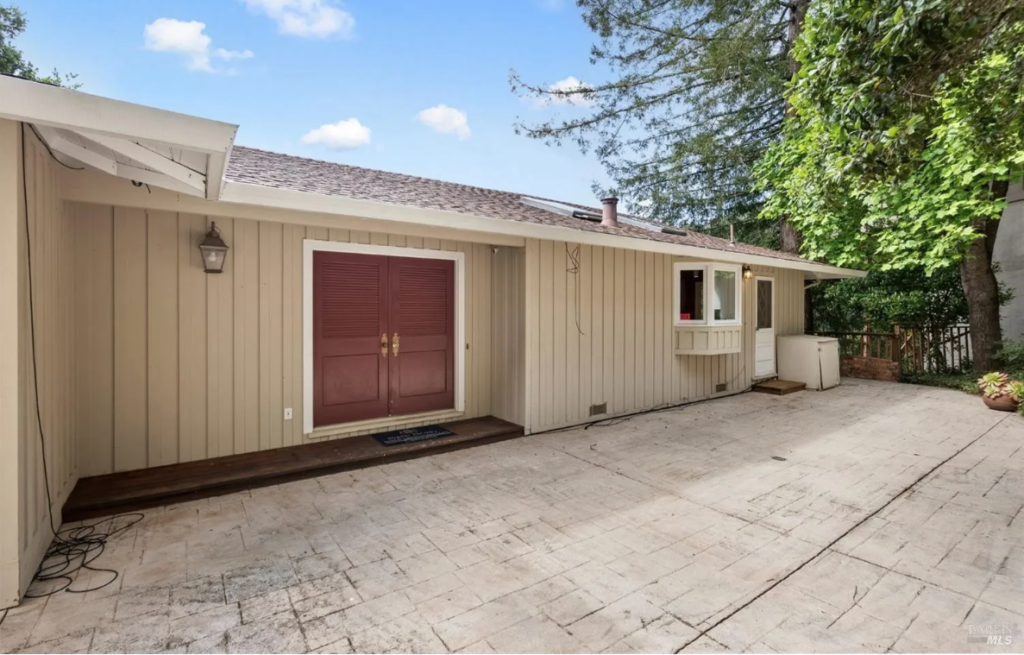
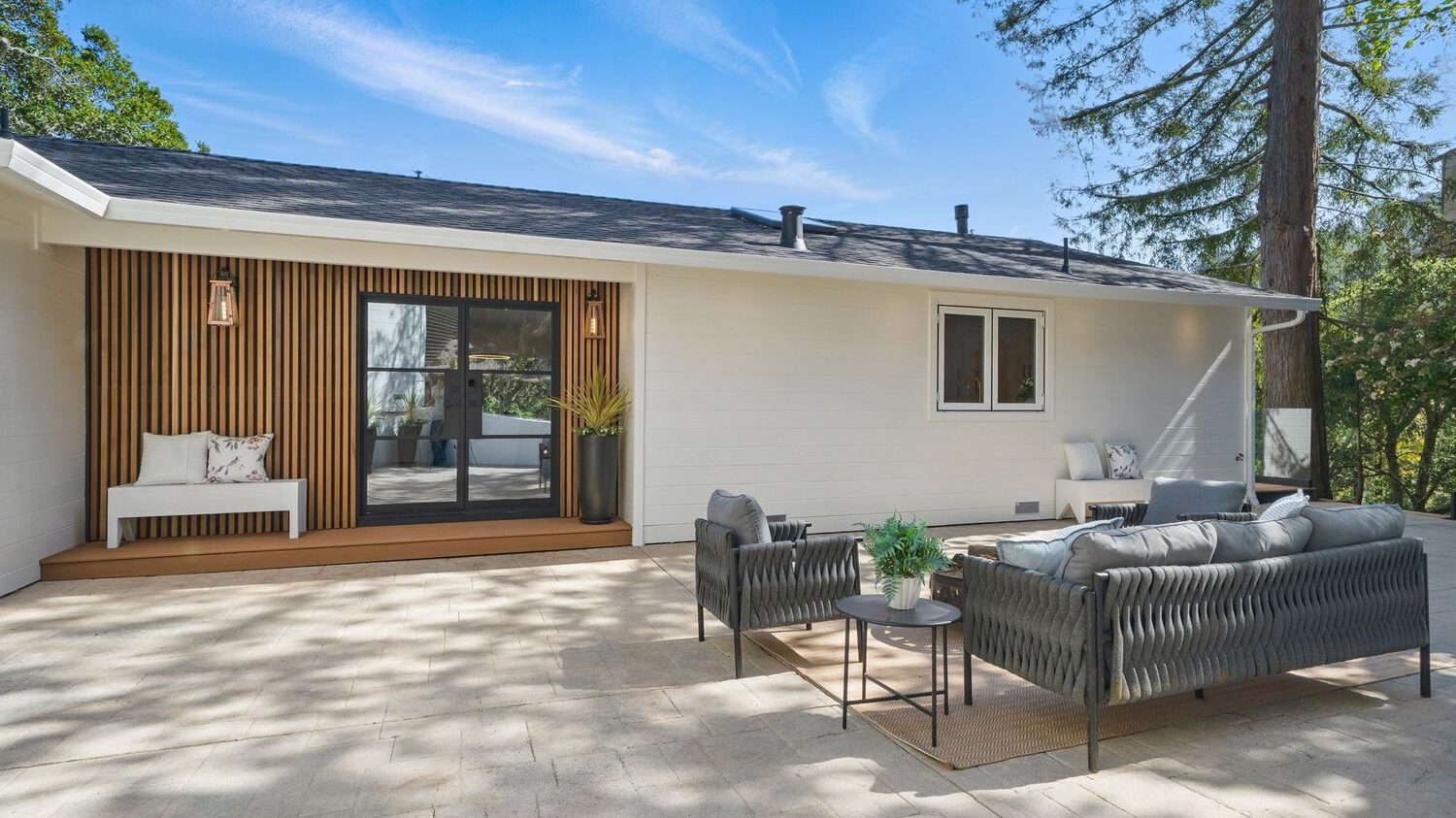
The above project in Mill Valley was a complete refresh of a farmhouse exterior with new siding, porch, and entry expression, as well as a full inter remodel for modern living.
.
Historical Home Additions: Designing Vertical Expansions with Sensitivity
Some houses carry cultural and historical weight. Spanish Colonial and Victorian homes, common throughout California, demand special care—especially when adding vertically.
Here, the goal isn’t mimicry for its own sake, but continuity and understanding the logic of the original building. Roof forms, stucco thickness, window recesses, and proportions all matter. A poorly handled addition can flatten the depth and shadow that make these homes feel grounded.
We often work closely with planning departments and historic guidelines to ensure that new massing respects:
- Existing parapet lines and roof geometry
- Vertical proportions and solid-to-void ratios
- The tactile quality of materials
- Use of detailing that does not over-complicate
- Maintain original proportions while avoiding false historicism
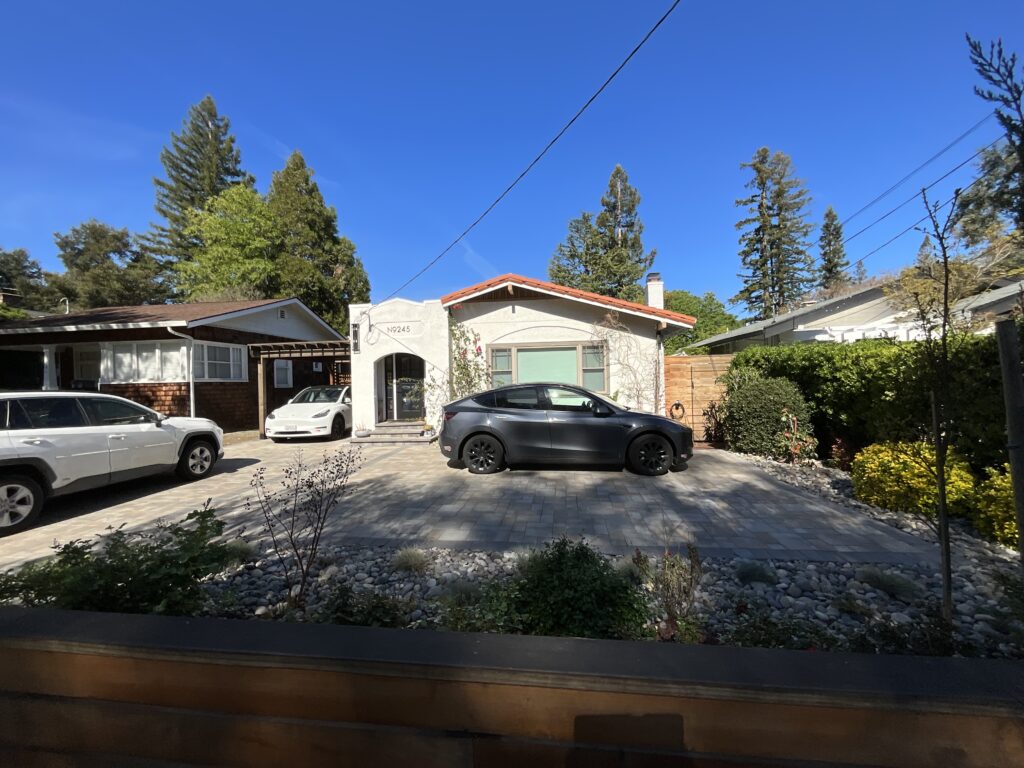
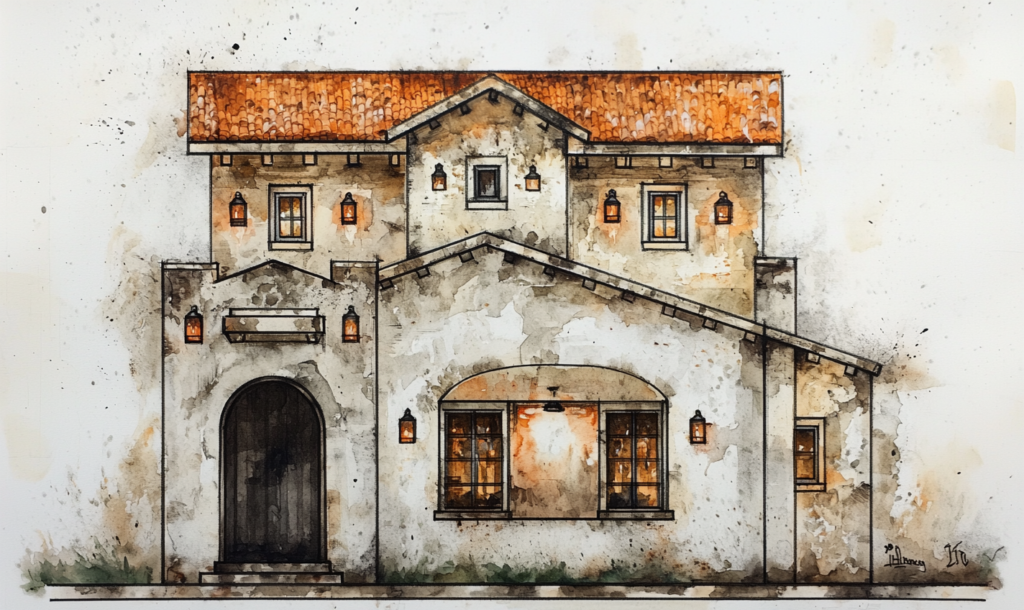
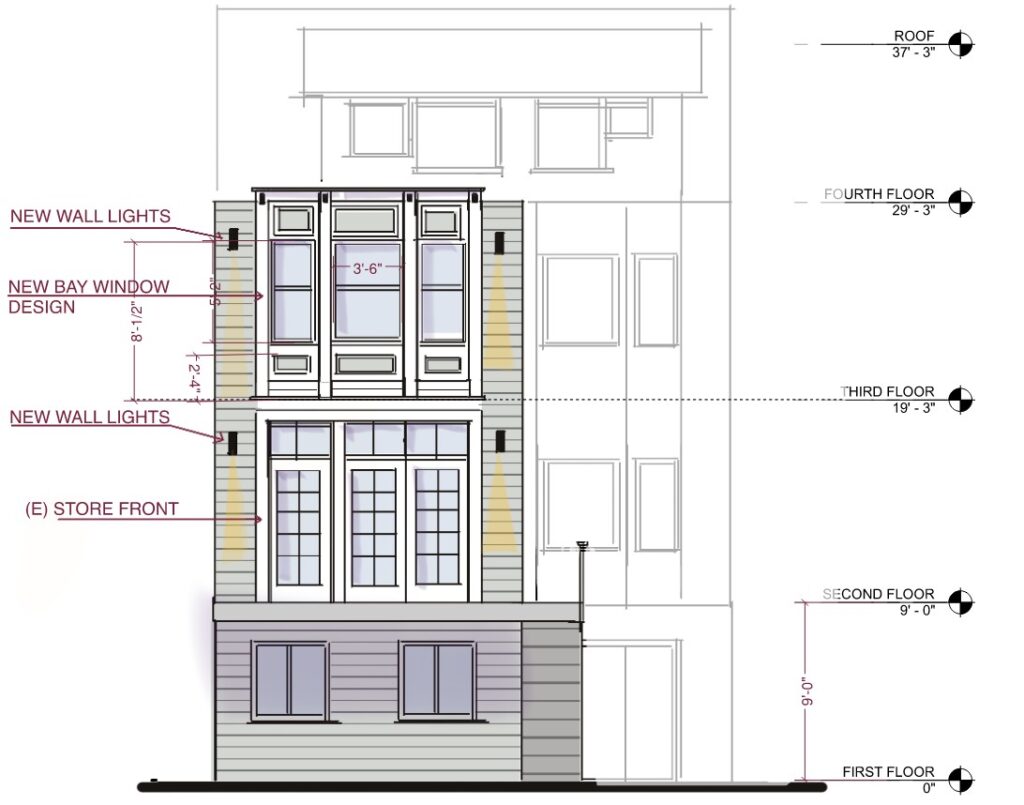
Above are two current projects with vertical additions that called for design sensitivity to produce something new that blended with the historical context.
We have a Spanish Revival house in Los Gatos, just approved by their Historical Committee; and a classic San Francisco Victorian where a new Bay Window will push out just enough for views of the Golden Gate Bridge.
Modern Rustic: Familiar Forms, Personal Expression
The modern farmhouse isn’t about trends—it’s about reinterpretation and personality.
In the Bay Area, these homes often sit at the edge of urban and rural contexts. The most successful versions lean into simple forms, restrained materials, and a modern understanding of light and indoor–outdoor living.
Key characteristics include:
- Clean massing with gable or shed roofs
- Large openings balanced with solid wall planes
- Contemporary detailing without faux-historic elements
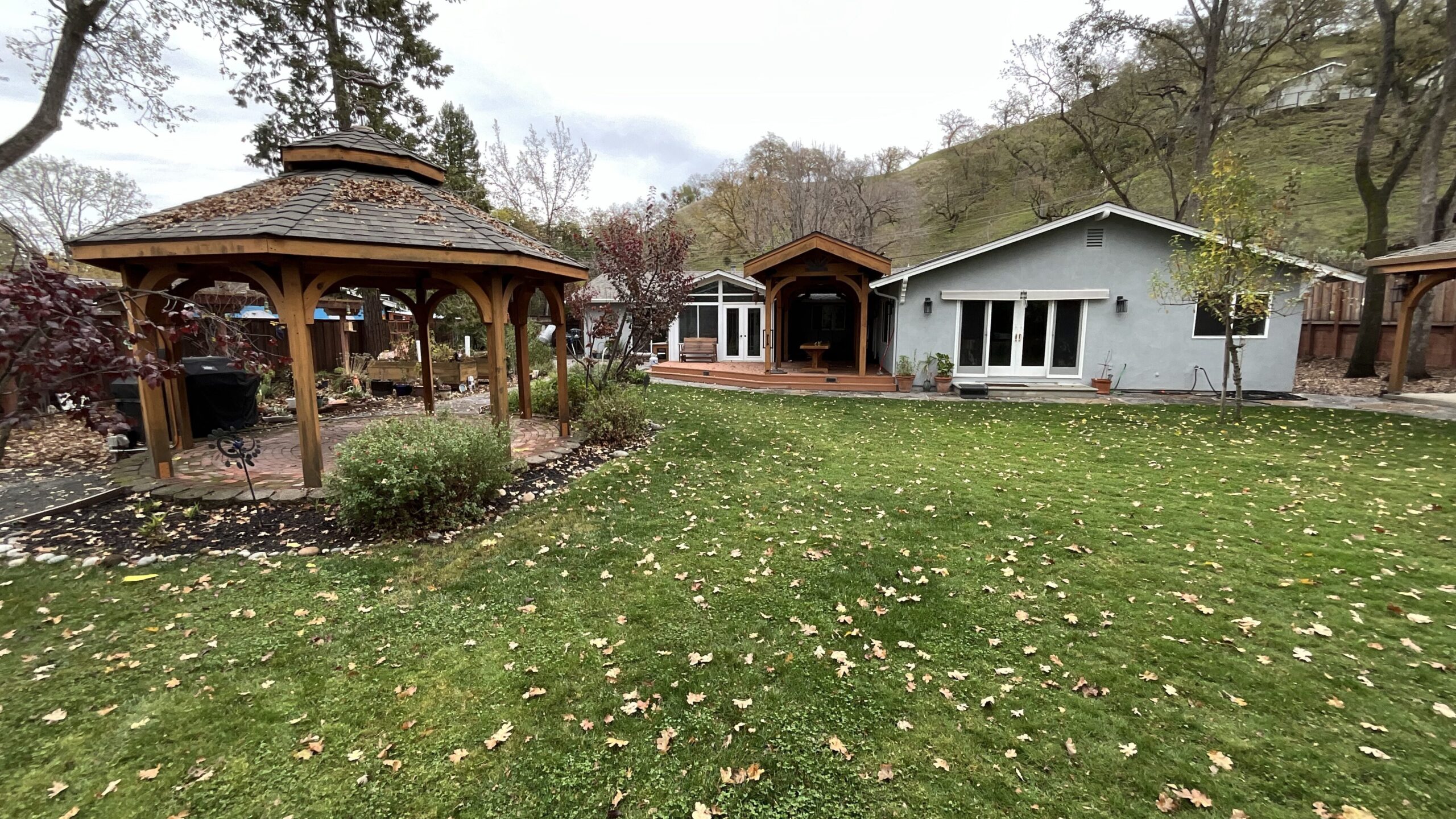
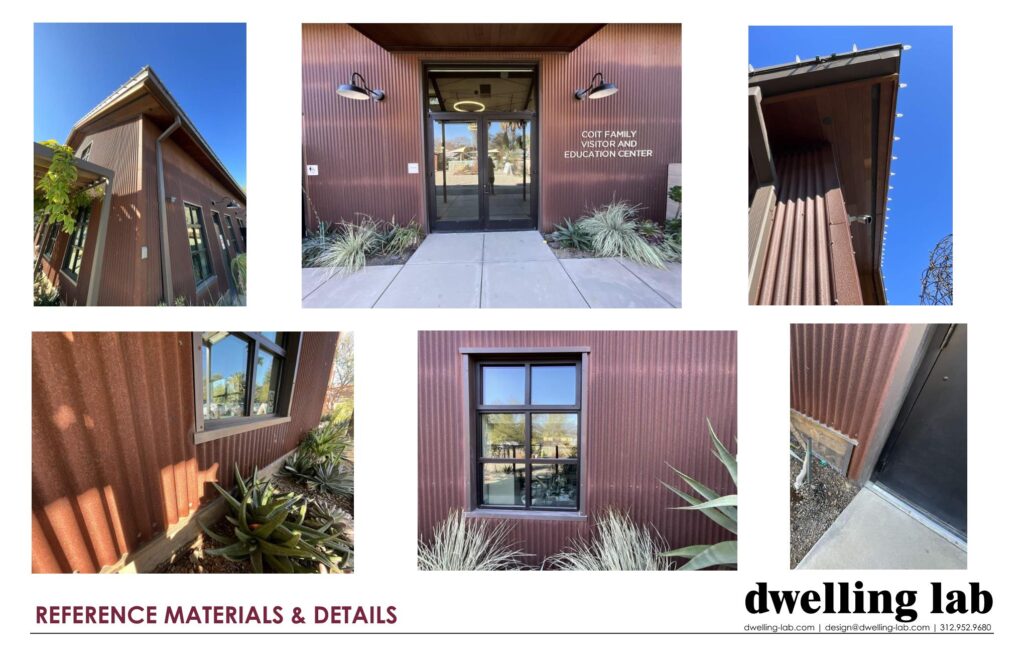
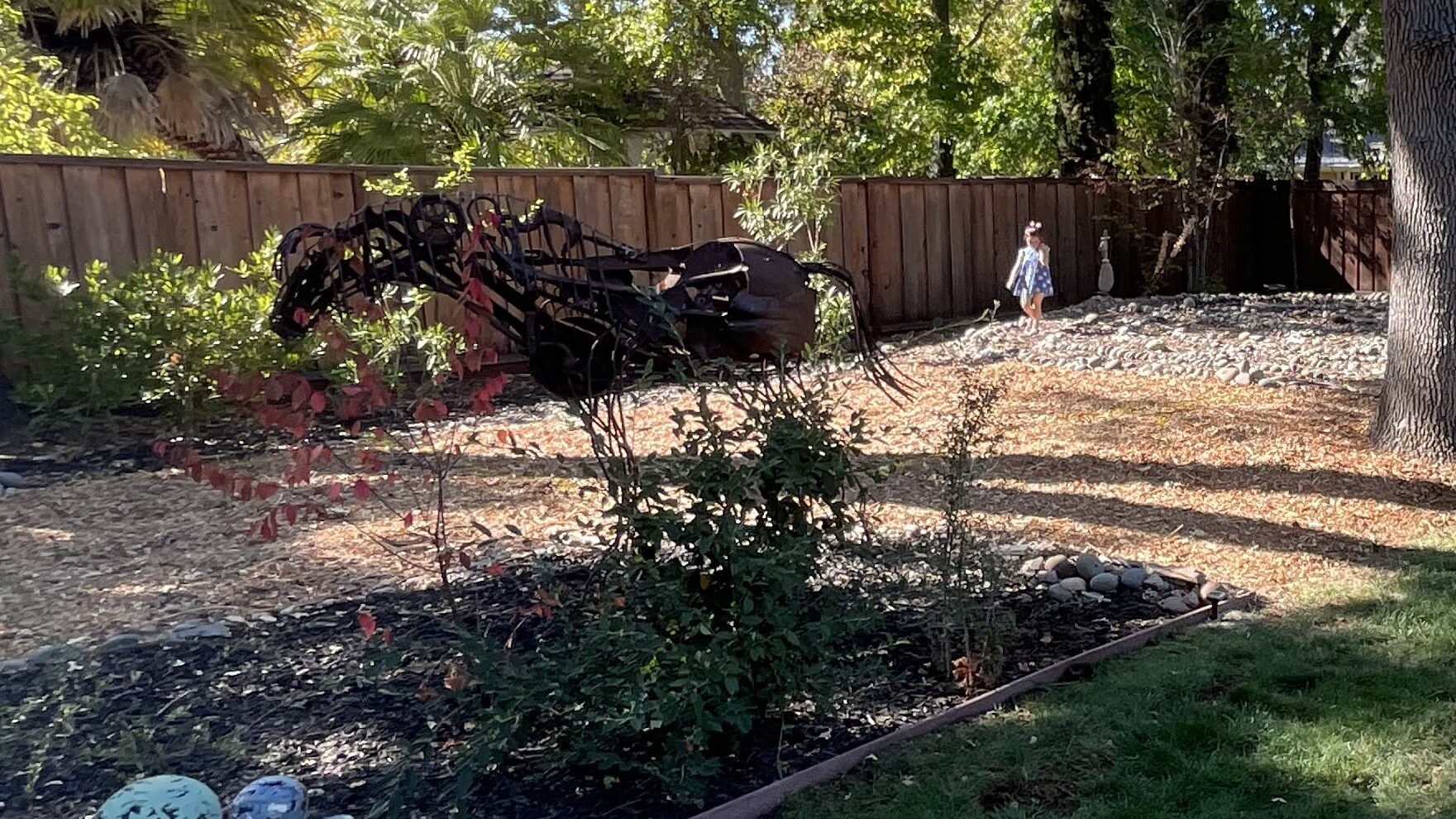
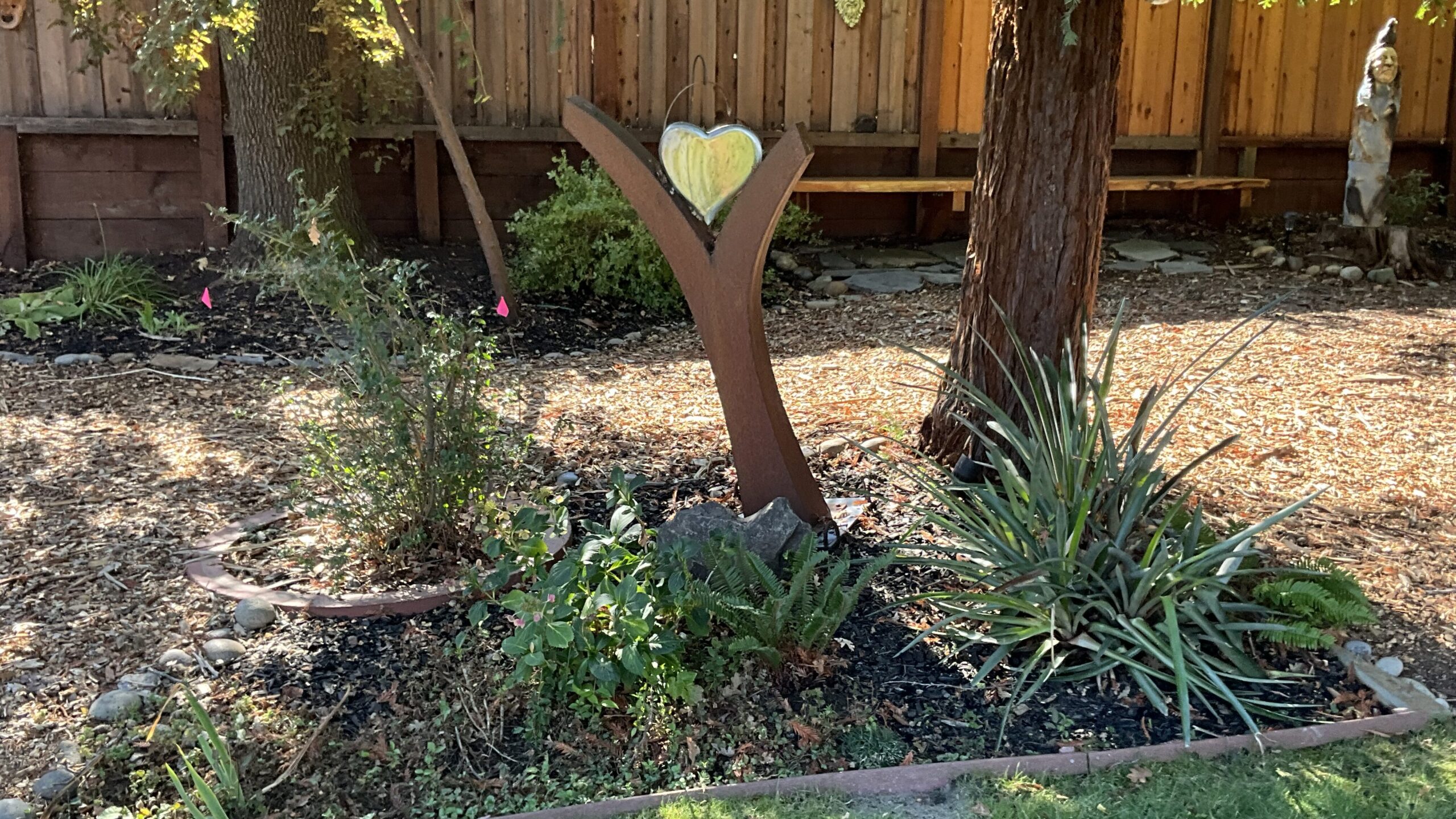
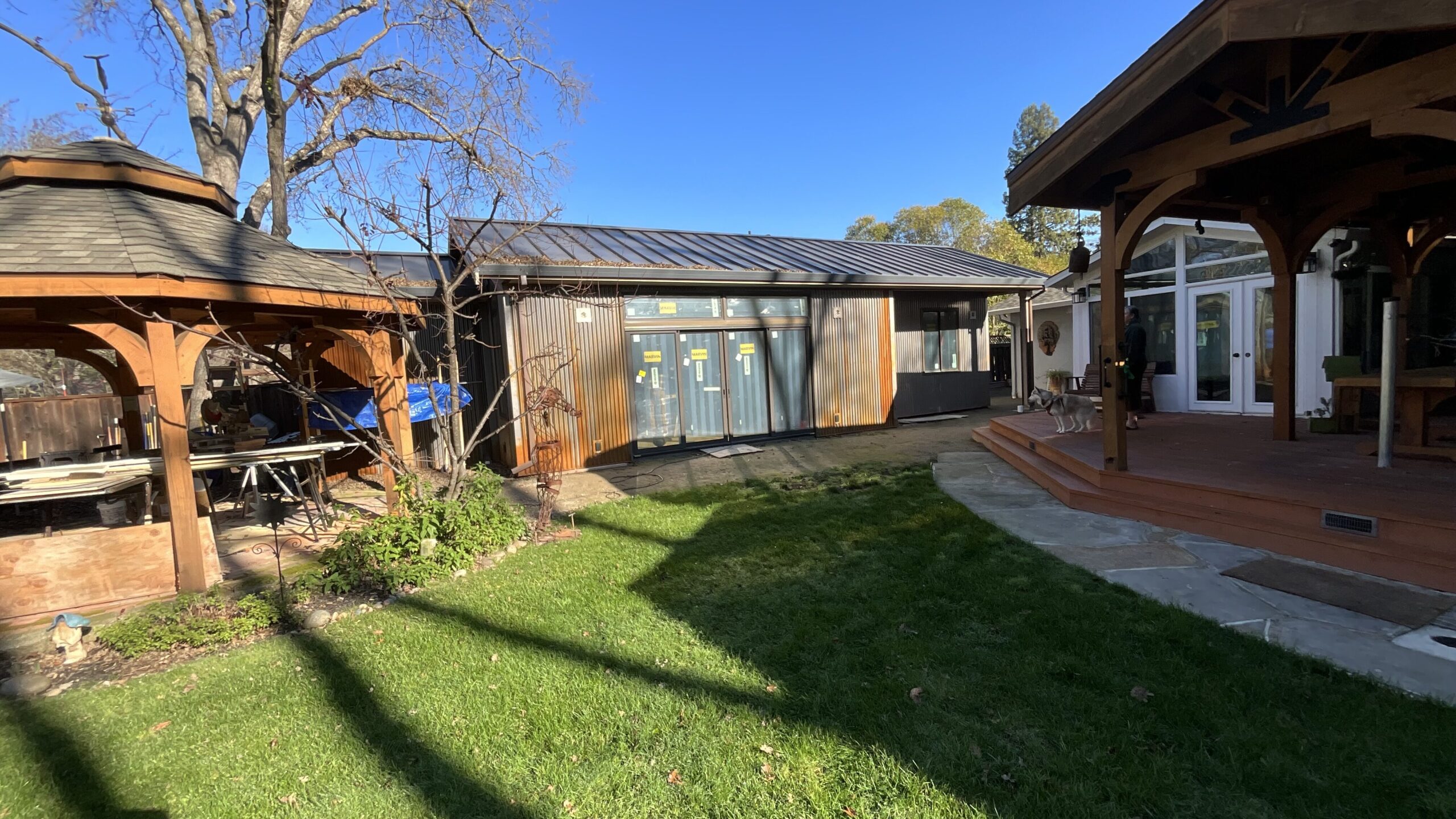
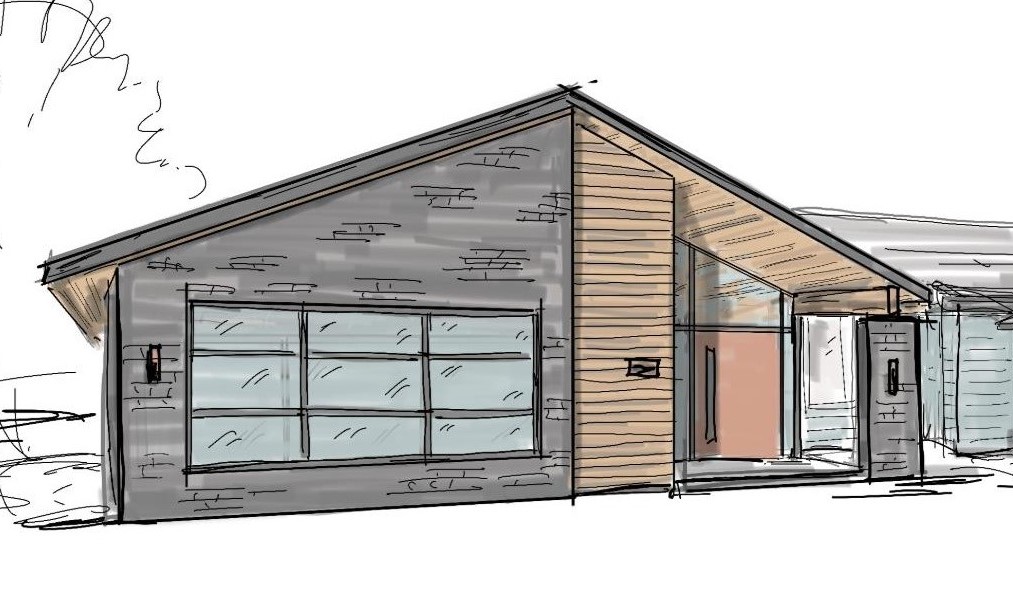
The New Construction ADU below is a direct response to the context of it’s location adjacent to a ranch-style home but also the personality of it’s owners as lovers of rusted iron sculpture and patrons of the Ruth Bancroft Gardens in Walnut Creek.
Complete Transformation: Turning a House Into Something New
Sometimes, the right answer is a clean break.
A complete façade upgrade allows a home to be reimagined as modern architecture, even if the underlying structure remains. This approach works well when:
- Previous alterations lack cohesion
- Energy performance upgrades are needed
- The owners want a clear architectural identity
Here, we think holistically—massing, fenestration, materials, and landscape working together as one system.
When everything is reconsidered at once, the exterior stops being a facade and starts being architecture.
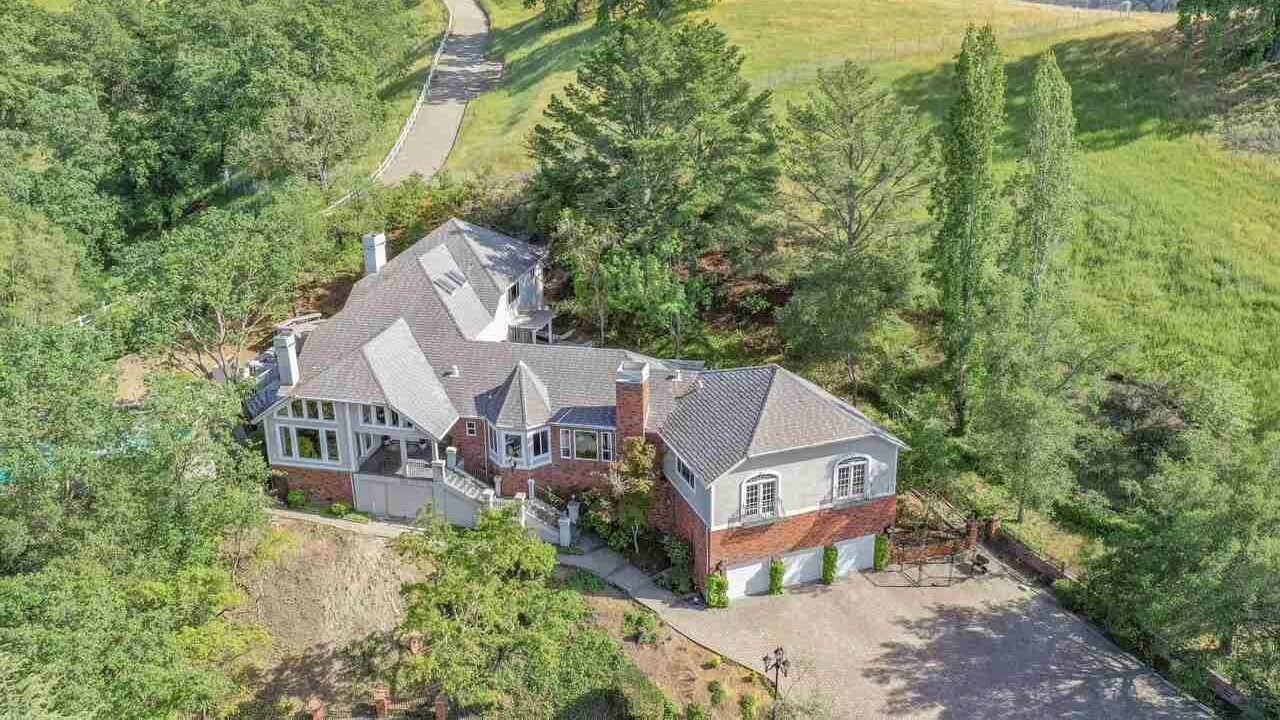
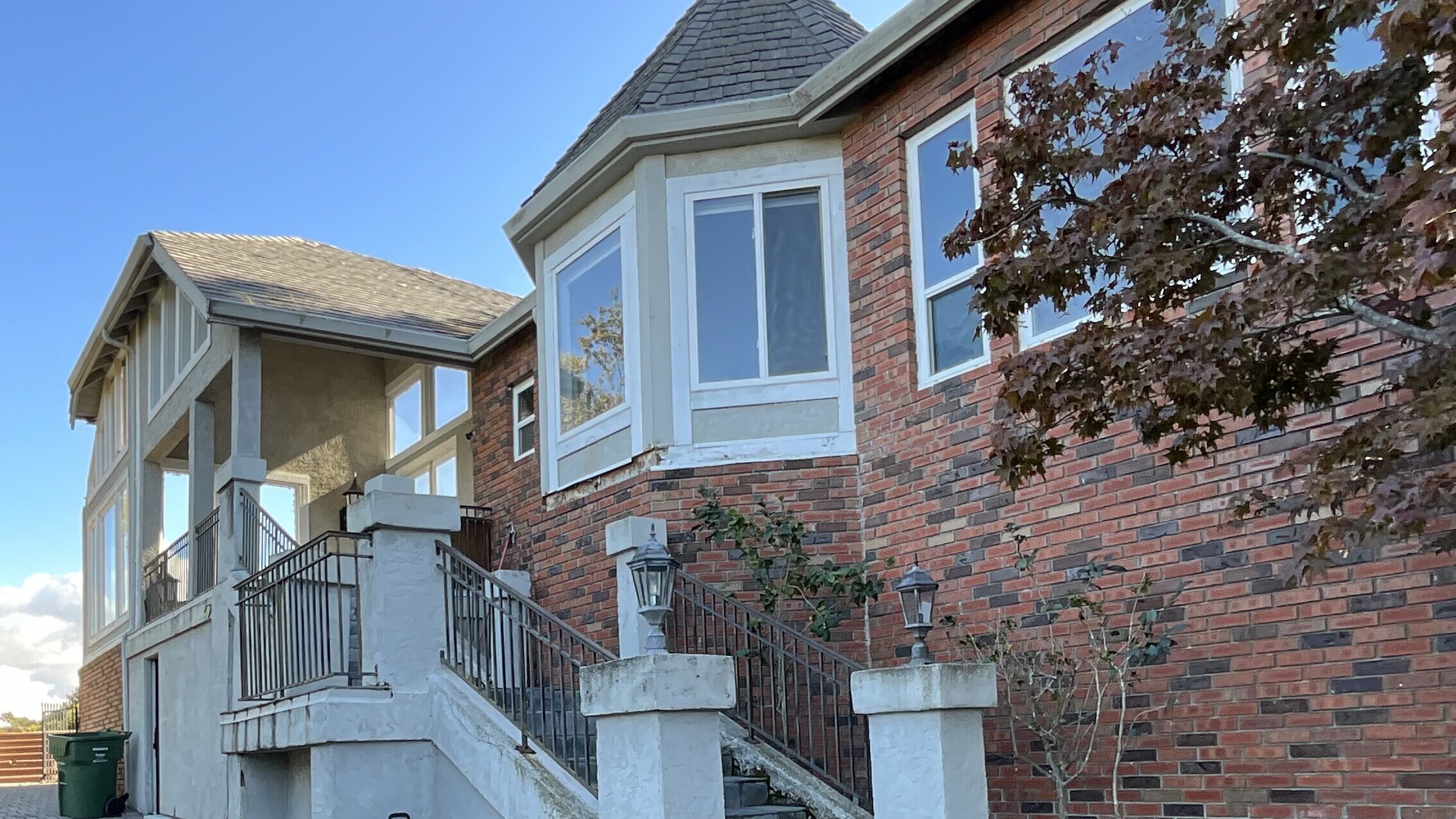
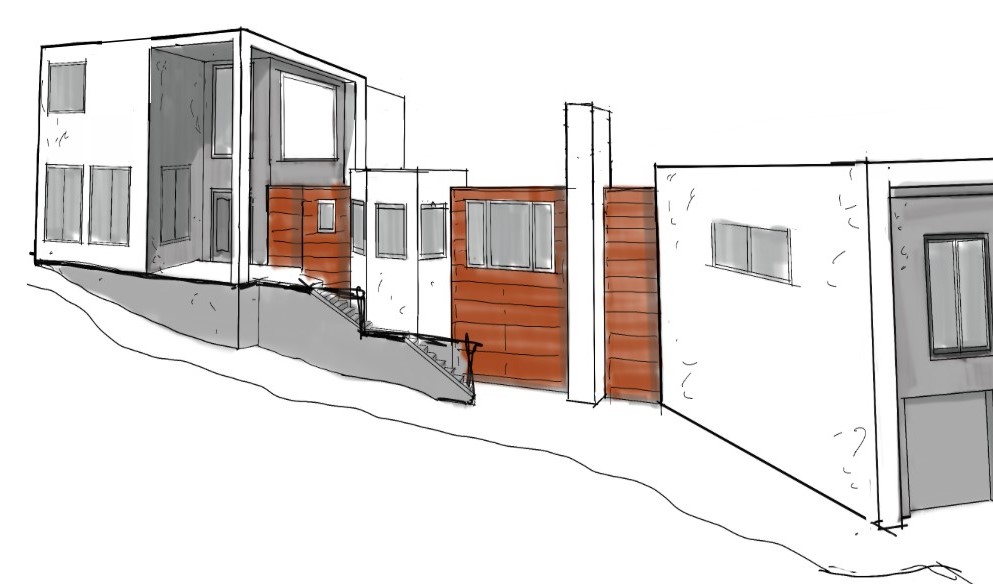
Fire damage to the above home in Alamo, CA, gave us the opportunity to reimagine the home entirely, using a new modern addition as a springboard to transform the whole exterior expression of the home. (Phoenix from the flames!?)
Mid-Century Modern—and Modern, Period
Mid-century modern homes hold a special place in Northern California. When working on them, our goal is preservation through evolution—honoring clarity of structure, indoor–outdoor flow, emphasis on horizontality, and material honesty.
Purely modern architecture, on the other hand, allows us to respond more directly to site conditions: slope, views, solar orientation, and privacy. In both cases, the exterior becomes a tool for living well—not just looking good.
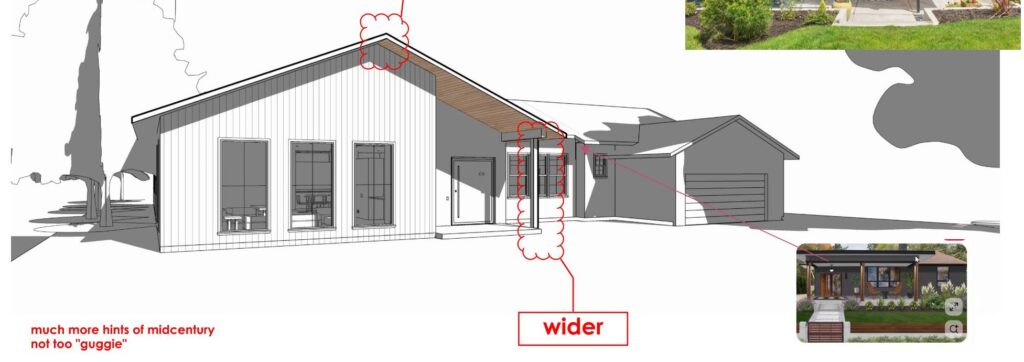
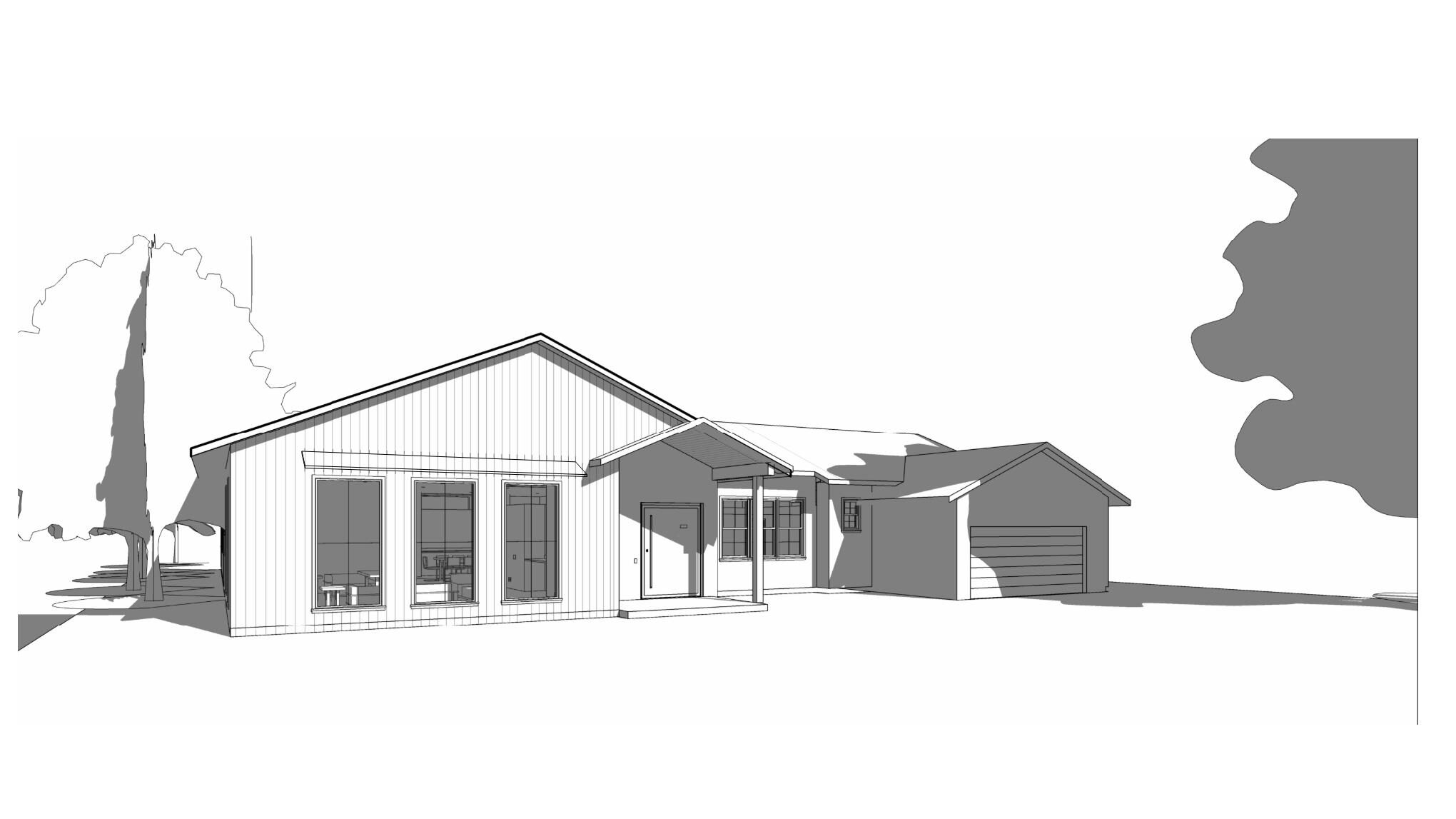
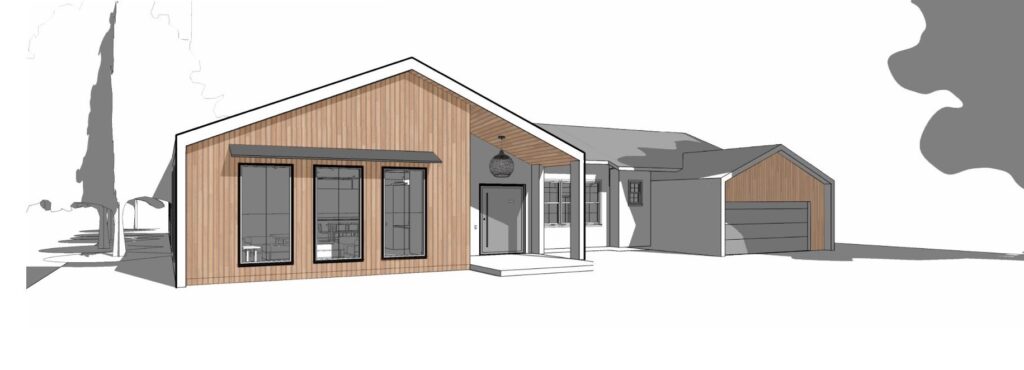
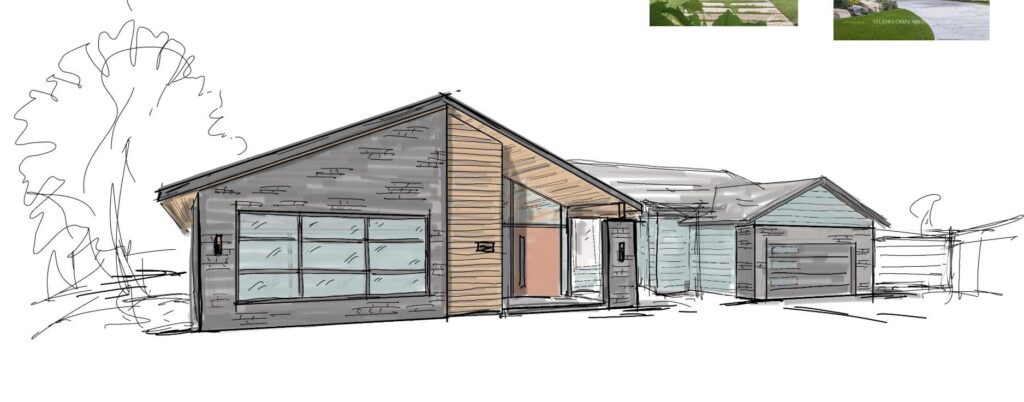
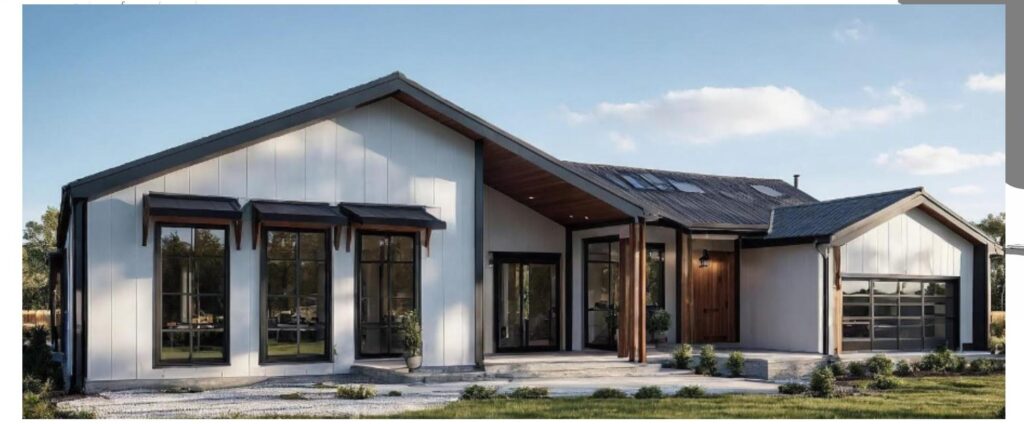
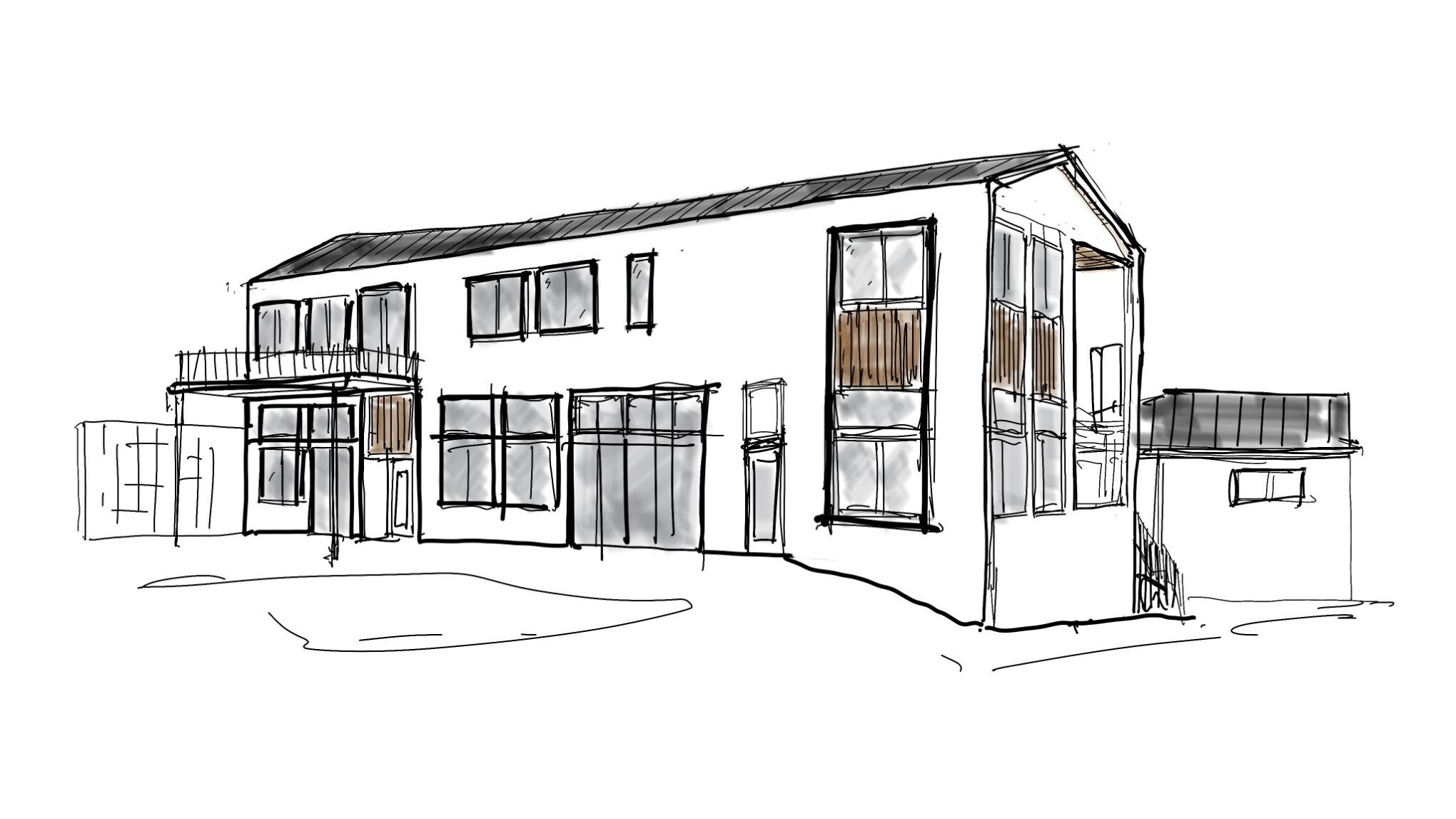
The case study above shows our process in testing ideas for a home addition in Sacramento to understand what works best with the context we have, the functional requirements of the home, and the personality of it’s family!
Regulatory Context: Zoning Code, Local Context, and your own Front Door
Finally, exteriors matter just as much for new construction home and small multifamily projects.
City planning codes often require:
- At least two different exterior materials
- Facade relief and articulation
- Clear, individual entries – your own front door
- For single family homes, primacy of the home over the garage
The best designs use these requirements as an opportunity—not a constraint. Thoughtful material transitions, scaled entries, and well-defined front doors help small multifamily buildings feel residential, approachable, and grounded in their neighborhoods.
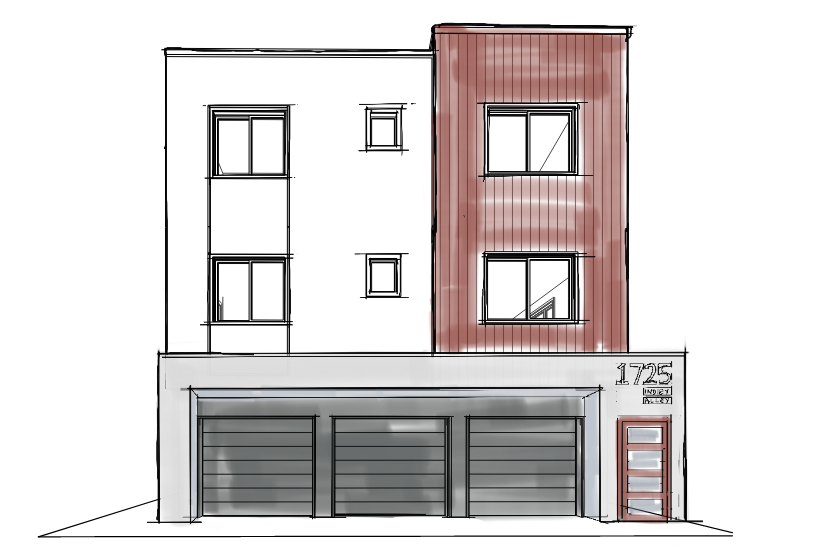
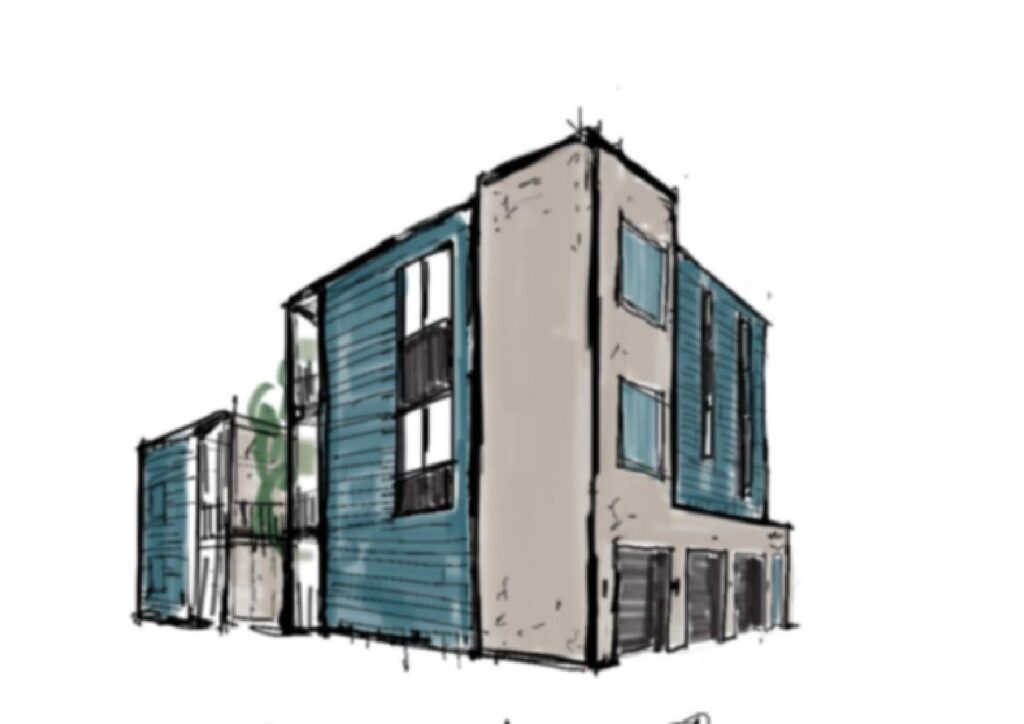
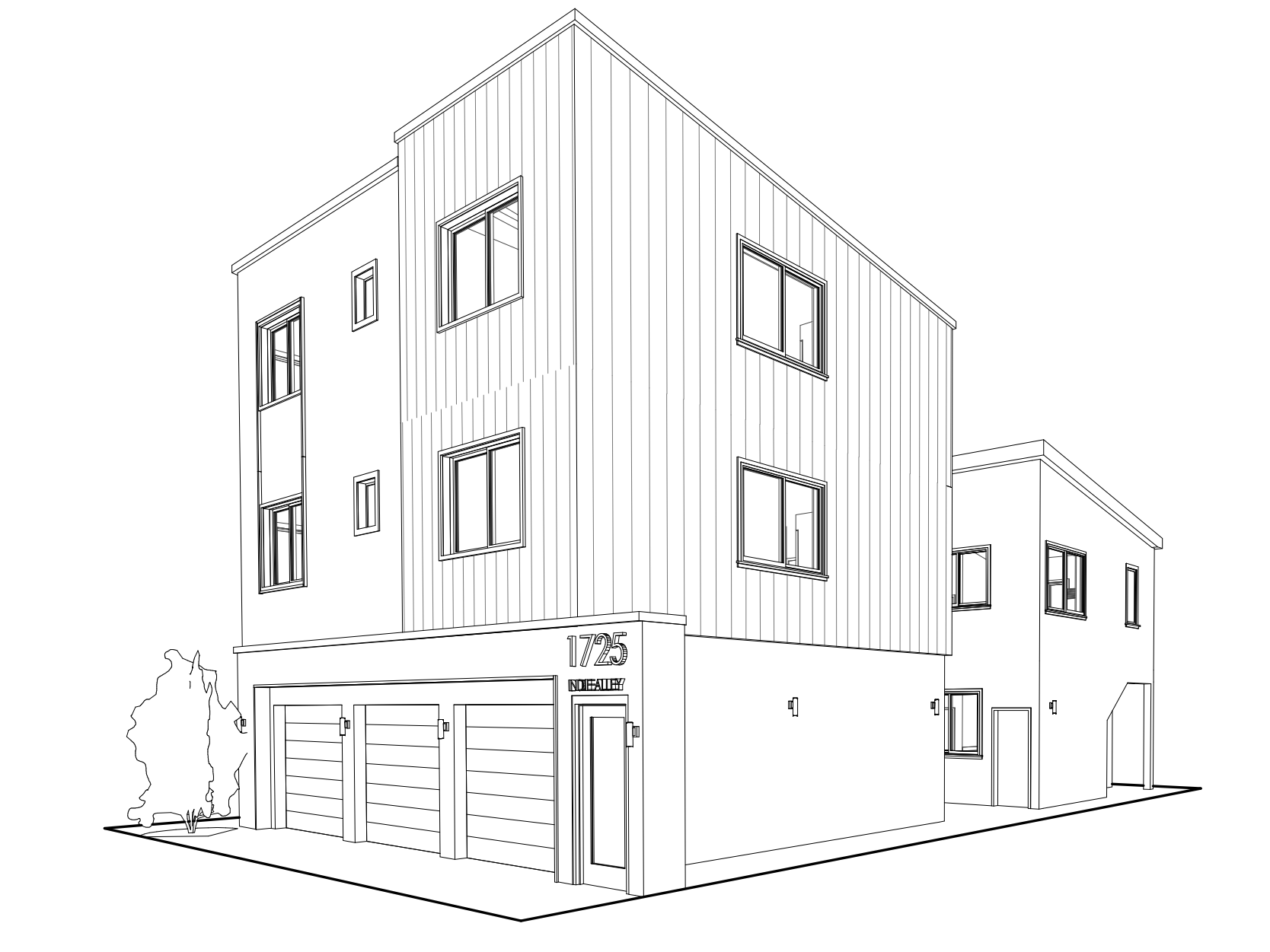
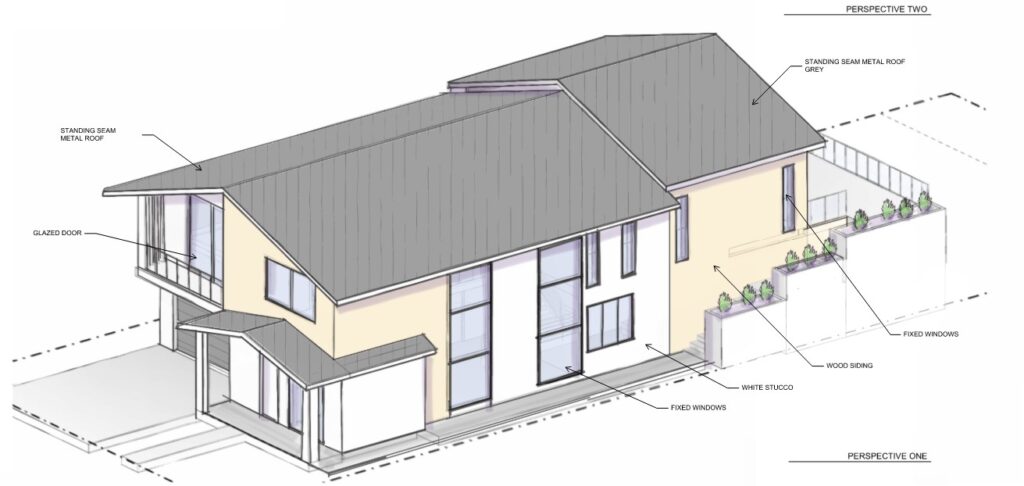
The examples above are, in part, a direct response to the requirements of the zoning codes in Sacramento, for the Multifamily projects, and Santa Clara for the new construction home.
Both jurisdictions require relief in the primary facade, use of at least two different materials, and articulation of the front door as a place to come home to
The Big Idea: Context, Character, and Code
A house’s exterior isn’t about style alone. It’s about fit—with the site, the neighborhood, the climate, the city, and the people who live inside.
In Northern California, great exteriors emerge when we balance:
- Respect for what exists
- Clarity about what’s new
- Responsiveness to planning and zoning codes
- A genuine expression of the owners’ lives
When a house stops being just a building—and starts feeling like home.